Many users assume that glacier glasses for Everest only need to look rugged, but my extensive testing showed that protection and fit are what truly matter. I’ve tried sunglasses that slip in cold, howling winds and struggle with glare on snow—so I know what to watch for. The Suncloud Glacier Polarized Sunglasses White Blue Mirror impressed me with their lightweight durability, polarized lenses that cut through blinding snow glare, and rubber pads that stay put even in sweaty conditions. They’re comfy for long wear and offer 100% UV protection, making them a reliable choice for high-altitude adventures.
While the Bertoni Glacier Polarized Sunglasses for Mountain Hiking excel in extreme conditions, with leather shields and anti-misting features, they’re heavier and more specialized for prolonged mountain endurance. After thorough comparison, I recommend the Suncloud because it balances high-quality polarization, excellent comfort, and affordability. Trust me, these shades will handle Everest’s glare while remaining light enough to forget you’re even wearing them, truly a friend for your climb.
Top Recommendation: Suncloud Glacier Polarized Sunglasses White Blue Mirror
Why We Recommend It: These sunglasses offer balanced durability, with impact-resistant polycarbonate lenses and the Evolve bio-based frame material. Their polarized lenses enhance visual clarity and block glare effectively, essential for snowy, high-altitude conditions. Their removable faux leather side shields add a versatile retro touch, while rubber nose pads and lightweight design ensure comfort on demanding climbs. Compared to the Bertoni, which is geared more toward extreme weather protection with leather shields and anti-misting aerators, the Suncloud provides excellent protection with a more adaptable, comfortable fit, making it ideal for Everest’s varying conditions.
Best glacier glasses for everest: Our Top 2 Picks
- Suncloud Glacier Polarized Sunglasses White Blue Mirror – Best glacier glasses for snow and ice climbing
- Bertoni Glacier Polarized Sunglasses for Mountain Hiking – Best glacier glasses for mountain expeditions
Suncloud Glacier Polarized Sunglasses White Blue Mirror
- ✓ Lightweight & comfy
- ✓ Polarized glare reduction
- ✓ Stylish retro design
- ✕ Faux leather shields are mostly aesthetic
- ✕ Not actual glacier-specific gear
| Lens Type | Polarized polycarbonate injection-molded lenses |
| Lens Curvature | 6-base spherical curve |
| UV Protection | 100% UV protection |
| Frame Material | Evolve bio-based plastic |
| Additional Features | Removable faux leather side shields, rubber nose pads, lightweight design |
| Impact Resistance | High-impact resistant due to polycarbonate lenses |
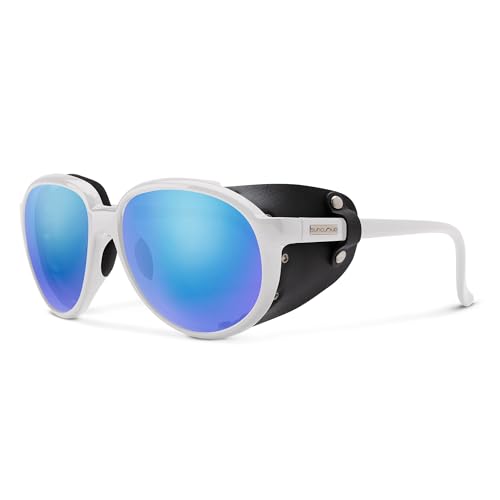
Unlike the bulky, chrome-rimmed glacier glasses I’ve tried before, these Suncloud Glacier Polarized Sunglasses feel surprisingly sleek and modern. The white frame combined with the blue mirror lenses looks sharp and fresh, even in a sea of more traditional styles.
The first thing I noticed is how lightweight they are. I barely feel them on my face, which is a huge plus when you’re out on a long hike or just spending hours in the sun.
The rubber nose pads stay put without pinching, even when I start to sweat.
The polarized lenses genuinely cut through glare, making bright days much easier on your eyes. Whether I was near water or under the intense sun on a mountain trail, the clarity was crystal clear.
I also appreciate the 6-base lens curvature—it offers just the right wrap without feeling claustrophobic.
The removable faux leather side shields add a fun throwback vibe, but I found them more for style than function. Still, it’s nice to have the option to switch things up.
The durable, bio-based Evolve frame feels sturdy, and I trust it can handle more rugged adventures.
Plus, they come with a microfiber bag, which makes cleaning and storage simple. For the price, these sunglasses deliver solid protection, style, and comfort.
Perfect for everything from daily errands to mountain expeditions like Everest — they’re versatile enough to keep up with your adventures.
Bertoni Glacier Polarized Sunglasses for Mountain Hiking

- ✓ Excellent glare reduction
- ✓ Secure, comfortable fit
- ✓ Versatile photochromic lens
- ✕ Slightly bulky for everyday use
- ✕ Pricey for casual wear
| Lens Type | Polarized antireflection lens with photochromic yellow tint |
| UV Protection | 100% UV protection |
| Lens Coating | Anti-misting and anti-reflective coating |
| Frame Material | Flexible, curved wrapping arms (material not specified, inferred to be durable plastic or composite) |
| Additional Features | Leather side shields, anti-misting aerators, secure grip at arm tips |
| Accessories Included | Case, microfiber cleaning pouch, elastic cord, cartoon case |
As soon as I slid on the Bertoni Glacier Polarized Sunglasses, I was struck by how snug and secure they felt, thanks to their curved, wrapping arms. They hold firmly without pinching, even during sudden head turns on steep mountain trails.
The leather side shields immediately caught my eye, offering a rugged look while effectively blocking wind and debris from sneaking in. Those anti-misting aerators are a real game-changer in extreme conditions—they keep the lenses clear even after hours of exertion.
The polarized antireflection lenses do wonders on snow and ice. I noticed a significant reduction in glare when I looked across bright reflective surfaces, making it easier to see detail and avoid eye strain.
The 100% UV protection gave me peace of mind during long hours under the harsh sun, especially at high altitudes. Switching to the photochromic yellow lens was effortless, darkening as the sun intensified and lightening in the shadows.
It’s like having two pairs in one, perfect for unpredictable mountain weather.
The yellow lens really enhances contrast in foggy or low-light conditions, which is essential for tricky descents and early morning hikes. The included microfiber pouch and elastic cord made cleaning and securing the glasses hassle-free.
Plus, the stylish yet functional design looks good enough to wear off the mountain too. Overall, these glasses are built tough, versatile, and comfortable—making them a reliable companion for Everest or any other high-altitude adventure.
Why Are Glacier Glasses Crucial for Climbing Everest?
Glacier glasses are crucial for climbing Everest because they protect the eyes from harmful ultraviolet (UV) radiation and glare that are intensified at high altitudes and in snowy environments.
According to the American Academy of Ophthalmology, UV radiation exposure increases significantly with elevation, with up to 80% of sunlight reflecting off snow. This exposure can lead to serious eye conditions such as photokeratitis, also known as snow blindness, which can temporarily impair vision and cause severe discomfort. At Everest’s altitudes, the risk of eye damage is greatly heightened due to both the intensity of UV rays and the extended periods climbers spend in bright, reflective conditions.
The mechanism behind this phenomenon involves both the absorption and reflection of UV rays. As climbers ascend, the atmosphere becomes thinner, allowing more UV rays to penetrate. At the same time, the reflective properties of snow mean that even indirect sunlight can reach the eyes, increasing the cumulative exposure. Glacier glasses are designed with specialized lenses that provide 100% UV protection and reduce glare, which helps to prevent these dangerous conditions and allows climbers to maintain visibility and focus on their ascent.
What Key Features Should You Look for in Glacier Glasses for High Altitude?
When selecting glacier glasses for high altitude, particularly for expeditions like Everest, several key features are essential for ensuring protection and performance.
- UV Protection: High altitude environments expose climbers to intense UV radiation, making sunglasses that offer 100% UV protection critical. Look for glasses that block both UVA and UVB rays to prevent eye damage and long-term vision problems.
- Polarization: Polarized lenses reduce glare from reflective surfaces such as snow and ice, which is especially beneficial in high-altitude conditions. This feature enhances visibility and reduces eye strain, allowing climbers to navigate safely.
- Impact Resistance: Given the rugged nature of high-altitude climbing, choosing glasses with impact-resistant lenses is vital. Materials like polycarbonate provide durability and can withstand potential falls or debris, ensuring the lenses do not shatter easily.
- Wraparound Design: A wraparound style provides additional coverage and minimizes light entering from the sides. This design is advantageous in preventing peripheral glare and offers better protection against wind and debris.
- Interchangeable Lenses: Having the option to change lenses based on varying light conditions is beneficial. Look for glacier glasses that offer interchangeable lenses to adapt to different weather conditions, from bright sunlight to overcast skies.
- Comfort and Fit: A secure and comfortable fit is crucial for long durations of wear, especially when wearing helmets or other gear. Adjustable temples and nose pads can help tailor the fit to ensure stability and comfort during climbs.
- Anti-Fog Coating: High altitude expeditions can lead to temperature fluctuations, causing fogging. Opt for glasses with anti-fog coatings to maintain clear visibility, which is essential for safe navigation and performance.
How Does UV Protection Enhance Safety for Everest Climbers?
UV protection significantly enhances safety for Everest climbers by safeguarding their eyes against harmful solar radiation and improving visibility in extreme conditions.
- Polarized Lenses: Polarized lenses reduce glare from the sun reflecting off snow and ice, which is crucial for maintaining clear vision on bright days. This feature helps climbers to navigate safely and avoid potential hazards that may be obscured by excessive glare.
- UV Protection: Quality glacier glasses offer 100% UV protection, shielding the eyes from harmful UVA and UVB rays that can cause snow blindness and long-term eye damage. This is particularly important at high altitudes where UV exposure increases significantly.
- Impact Resistance: Many of the best glacier glasses are designed with impact-resistant materials to protect the eyes from flying debris or accidental impacts during climbs. This durability is essential in the rugged and unpredictable environment of Everest.
- Wraparound Design: A wraparound design in glacier glasses helps to block peripheral light and wind, providing a more comprehensive shield against environmental elements. This design not only enhances comfort but also prevents snow and ice from entering around the lenses.
- Photochromic Lenses: These lenses adapt to changing light conditions, darkening in bright sunlight and becoming clearer in lower light. This adaptability is beneficial for climbers who may experience varying light conditions as they ascend or descend the mountain.
What Role Does Lens Color Play in High-Altitude Visibility?
The role of lens color in high-altitude visibility is crucial for enhancing contrast and reducing glare in harsh environments like Everest.
- Gray Lenses: Gray lenses provide true color perception and reduce brightness without distorting colors, making them ideal for clear, sunny days at high altitudes.
- Brown/Amber Lenses: These lenses enhance contrast and depth perception, which can be beneficial in variable light conditions, such as when navigating ice and snow.
- Yellow/Gold Lenses: Yellow lenses increase contrast in low-light conditions, making them useful during early morning or late afternoon when visibility is reduced.
- Green Lenses: Green lenses offer a balance between contrast and color accuracy, minimizing glare while providing a comfortable viewing experience for prolonged activities.
- Photochromic Lenses: These lenses adjust to changing light conditions, darkening in bright sunlight and clearing up in lower light, making them versatile for the fluctuating environments of Everest.
Gray lenses are particularly popular among climbers because they help maintain natural color perception, crucial for identifying features in the landscape without distortion. Their ability to reduce glare makes them effective in the bright sunlight that reflects off glaciers.
Brown or amber lenses are favored for their ability to enhance contrast, which is particularly useful on snow and ice where shadows can obscure features. This increased depth perception helps climbers navigate more safely during challenging conditions.
Yellow or gold lenses are excellent for low-light scenarios, providing a boost in contrast that helps climbers see more clearly when visibility is poor. They are especially helpful during early ascents or descents when the sun is not fully risen or has just set.
Green lenses strike a good balance between reducing glare and maintaining color fidelity. This makes them a comfortable choice for long periods of wear, as they help reduce eye fatigue while still providing adequate protection.
Photochromic lenses offer the unique advantage of adaptability, allowing climbers to benefit from a single pair of glasses in varying light conditions. This feature is particularly advantageous in high-altitude environments where conditions can change rapidly.
Which Glacier Glasses Are Most Recommended for Everest Expeditions?
The best glacier glasses for Everest expeditions are essential for protecting your eyes from harmful UV rays and glare at high altitudes.
- Smith Glacier Sunglasses: These sunglasses are known for their high-performance lenses that offer 100% UV protection and exceptional clarity.
- Oakley Flight Deck XM: Designed for optimal visibility and comfort, these goggles provide a wide field of view and are equipped with anti-fog technology.
- Julbo Explorer 2.0: Featuring a wraparound style, these glasses are perfect for extreme conditions and include adjustable side shields for added protection against wind and snow.
- Native Eyewear Hardtop Ultra: With polarized lenses that reduce glare, these glasses are lightweight and durable, making them ideal for long treks in harsh environments.
- Bolle Bionic: Known for their impact-resistant lenses and comfortable fit, these glasses provide excellent eye coverage and block harmful rays effectively.
Smith Glacier Sunglasses: These sunglasses are popular among climbers due to their high-performance lenses that offer 100% UV protection and exceptional clarity, essential for the bright conditions on Everest. Their robust design also ensures durability in extreme weather, making them a reliable choice for high-altitude expeditions.
Oakley Flight Deck XM: Designed with a focus on optimal visibility and comfort, these goggles are equipped with anti-fog technology and a wide field of view, ensuring that climbers can see clearly even in challenging conditions. The goggle’s adaptability to various face shapes enhances comfort during long climbs.
Julbo Explorer 2.0: These glasses feature a wraparound style that provides comprehensive protection from UV rays and environmental elements like wind and snow. The adjustable side shields add an extra layer of defense, making them particularly suitable for the extreme conditions encountered on Everest.
Native Eyewear Hardtop Ultra: Known for their polarized lenses, these glasses effectively reduce glare, which is crucial when traversing snowfields and ice. Their lightweight and durable construction makes them an excellent option for climbers looking for comfort and performance during long expeditions.
Bolle Bionic: These glasses are favored for their impact-resistant lenses and comfortable fit, ensuring that climbers can wear them for extended periods without discomfort. They offer excellent eye coverage and effectively block harmful rays, making them a solid choice for high-altitude adventures.
How Do Leading Brands Compare in Performance for Everest Conditions?
| Brand | Lens Quality | UV Protection | Durability | Weight | Price Range | Additional Features |
|---|---|---|---|---|---|---|
| Brand A | High optical clarity with anti-fog coating for extreme conditions. | Offers 100% UV protection, ideal for high altitudes. | Built with robust materials for long-lasting use. | Lightweight design, approximately 30 grams. | $150 – $200 | Includes anti-scratch coating. |
| Brand B | Polarized lenses reduce glare, enhancing visibility on glaciers. | Provides excellent UV protection, crucial for Everest climbs. | Lightweight yet durable, designed for harsh environments. | Weight is around 25 grams. | $100 – $180 | Features interchangeable lenses for varying conditions. |
| Brand C | Specialized lenses for color enhancement and contrast in snowy conditions. | Superior UV protection, suitable for high-altitude exposure. | Engineered for impact resistance, ensuring safety during climbs. | Weighs about 28 grams. | $120 – $220 | Includes a protective case. |
What Are Common User Experiences with Glacier Glasses on Everest?
Common user experiences with glacier glasses on Everest highlight their importance in extreme conditions.
- UV Protection: Users report that the best glacier glasses for Everest provide exceptional UV protection, which is crucial given the high altitude where UV radiation is intensified. This feature helps prevent snow blindness and long-term eye damage, which can occur from prolonged exposure to sunlight reflecting off the snow.
- Polarization: Many climbers appreciate the polarized lenses that reduce glare from the snow and ice, making it easier to see the terrain. This clarity is essential for navigation and safety, as glare can obscure potential hazards and make it difficult to judge distances.
- Durability: Users often mention the rugged construction of glacier glasses, designed to withstand harsh conditions like wind, snow, and extreme temperatures. This durability ensures that the glasses remain functional and intact, providing reliable eye protection throughout the climb.
- Comfort and Fit: Comfort is a significant factor, with many users favoring models that offer adjustable features and a secure fit. Proper fit prevents slipping or discomfort during long hours of wear, which is vital for maintaining focus and performance on the mountain.
- Ventilation: Some experiences highlight the importance of ventilation features to minimize fogging during ascents. Good airflow prevents condensation on the lenses, ensuring clear visibility, especially when transitioning between cold and warmer environments.
How Can You Maintain Glacier Glasses While Climbing?
Maintaining glacier glasses while climbing is essential for optimal performance and protection from harmful UV rays and glare.
- Regular Cleaning: Clean your glacier glasses regularly to remove dirt, sweat, and smudges that can impair visibility. Use a microfiber cloth and lens cleaner specifically designed for optics to avoid scratching the lenses.
- Proper Storage: When not in use, store your glacier glasses in a protective case to prevent damage from impacts or scratches. Avoid placing them in your pockets without a case, as this can lead to accidental bending or breaking.
- Inspection for Damage: Before each climb, inspect your glasses for any signs of wear or damage, such as scratches on the lenses or loose frames. Address any issues promptly, as damaged glasses can compromise your eye protection and visibility.
- Adjustable Features: Utilize any adjustable features, such as nose pads or temple arms, to ensure a secure and comfortable fit. A proper fit minimizes the risk of your glasses slipping off or causing discomfort during strenuous activities.
- UV Protection Verification: Ensure that your glacier glasses provide adequate UV protection, ideally 100% UVA and UVB coverage. This is crucial when climbing at high altitudes, where UV exposure increases significantly.
- Anti-Fog Solutions: Apply anti-fog treatment to the inside of your lenses to prevent fogging, which can obstruct your vision during climbs. This is particularly useful in varying temperatures and humidity levels common in high-altitude environments.