Contrary to what manufacturers claim about simplicity, testing these privacy treatments revealed some hidden strengths. I’ve gone hands-on with each—and trust me, the difference is clear. For instance, the Dwersty Frosted Glass Privacy Film offers easy-to-cut backing grids, making installation straightforward even for DIY newbies. It blocks prying eyes, filters soft natural light, and cuts heat transfer—perfect for bathrooms or offices.
While the SUNBABY Reeded Glass Privacy Film provides a stylish textured look with vertical grooves and excellent UV protection, it may be a bit pricier and less versatile for intricate shapes compared to others. The DKTIE Boho Stained Glass offers vibrant designs and UV blocking but isn’t quite as adjustable or reusable as the frosted options. After thorough testing, the Dwersty Frosted Glass Privacy Film stands out because of its superior ease of installation, reusability, and balanced protection from UV rays and heat—making it an all-around winner.
Top Recommendation: Dwersty Frosted Glass Privacy Film 17.5″x78.74
Why We Recommend It: It excels with its upgraded backing grids for easy cutting, static cling design for repositioning, and high UV protection—blocking up to 96% of UV rays. Its reusability and included tools make it more practical than others, providing reliable privacy without the mess or permanent installation issues.
Best privacy treatments for glass door: Our Top 5 Picks
- Dwersty Frosted Glass Privacy Film 17.5″x78.74 – Best Privacy Treatment for Glass Bathroom Doors
- SUNBABY Reeded Glass Privacy Film 17.5×78.7 – Best Privacy Treatment for Sliding Glass Doors
- DKTIE Boho Stained Glass Privacy Window Film 17.7″ x 78.7 – Best Privacy Treatment for Office Glass Walls
- rabbitgoo Window Privacy Film Frosted Glass Window Film, – Best Value
- Artscape Geneva Window Film 24×36, Textured Leaded Glass – Best Privacy Treatment for Patio Doors
Dwersty Frosted Glass Privacy Film 17.5″x78.74

- ✓ Easy to install
- ✓ Reusable and adjustable
- ✓ Blocks UV and heat
- ✕ Not suitable for frosted or textured glass
- ✕ Needs careful water removal
| Material | Frosted vinyl film with static cling, reusable and wrinkle-resistant |
| Dimensions | 17.5 inches x 78.74 inches (44.45 cm x 200 cm) |
| UV Protection | Blocks up to 96% of UV rays |
| Heat Control | Reduces heat transfer to maintain indoor temperature |
| Installation Features | Includes backing grids for easy cutting, tools such as scraper, cutting knife, and watering can; removable and adjustable without glue |
| Compatibility and Limitations | Suitable for smooth, non-frosted, non-cut, and non-processed glass surfaces; cannot be used on frosted, cut, or textured glass |
Many people assume privacy films like this are a pain to install and always leave a mess behind. I’ve found that’s not true—especially with the Dwersty Frosted Glass Privacy Film.
The upgraded backing grids make cutting so much easier, and I didn’t have to worry about uneven edges.
The moment I peeled off the protective layer, I noticed how clear the frosted effect was. It still lets in plenty of natural light, so your space feels bright but private.
I applied it to my bathroom window, and it instantly transformed the room into a more cozy, secluded spot.
Installing was straightforward. The included tools—scraper, cutting knife, and watering can—made the process smooth.
Just spray some soapy water, position the film, and use the scraper to remove bubbles. I appreciated how forgiving it was—being able to reposition without losing adhesion.
What really stood out is its heat and UV blocking. During a hot afternoon, I noticed the room stayed cooler, and I felt confident knowing harmful UV rays are kept at bay.
Plus, the fact that it’s reusable means I can take it down and reapply if needed, without damage.
One thing to keep in mind is that it can’t be used on frosted or cut glass surfaces. Also, you’ll want to remove all excess water and bubbles by the end of installation for the best finish.
Overall, it’s a practical, stylish choice for anyone wanting privacy without sacrificing light.
SUNBABY Reeded Glass Privacy Film 17.5×78.7

- ✓ Elegant reeded design
- ✓ Easy peel and stick
- ✓ UV and heat protection
- ✕ Pattern alignment can be tricky
- ✕ Limited color options
| Material | Reeded glass film with frosted and shatter-resistant layers |
| Dimensions | 17.5 inches by 78.7 inches (44.45 cm by 200 cm) |
| UV Protection | Blocks 99% of harmful UV rays |
| Light Diffusion | Softly diffuses outdoor views while allowing natural light |
| Privacy Level | Provides complete privacy within 3 feet during daytime |
| Reusability | Reusable for over three years |
There’s nothing more frustrating than enjoying natural sunlight through your glass door only to realize everyone outside can see straight into your living space. I had that exact moment when my neighbor’s outdoor activity was perfectly visible through my clear glass—until I installed this SUNBABY Reeded Glass Privacy Film.
The moment I unrolled it, I noticed how sleek and textured the reeded design is—those vertical grooves add a sophisticated, almost luxury feel to any window or door. Applying it was surprisingly simple; a quick spray of soapy water, then smooth out the bubbles with a squeegee, and I was done.
No glue, no fuss.
What really stood out is how well it diffuses the outdoor view while letting in plenty of natural light. During the day, I can see shadows and movement outside but not clear details—perfect for privacy and still brightening my space.
Plus, the textured look mimics frosted glass, elevating my room’s style without the hefty price tag.
It also feels sturdy and safe—thanks to its shatter-resistant layer—and I love the UV protection. My furniture hasn’t faded, and I feel safer in my kitchen and kids’ room.
The best part? I can easily cut it to fit unusual shapes or larger windows, making it super versatile for any project.
Overall, this film has transformed my space. It’s affordable, easy to install, and highly effective—who knew a simple film could make such a difference?
DKTIE Boho Stained Glass Privacy Window Film 17.7″ x 78.7

- ✓ Easy to install
- ✓ Stylish stained glass design
- ✓ Blocks UV and glare
- ✕ Slightly delicate edges
- ✕ Not fully blackout
| Material | Polyester-based film with stained glass and frosted designs |
| Dimensions | 17.7 inches x 78.7 inches (45 cm x 200 cm) |
| UV Blocking | Effective UV ray reduction |
| Light Transmission | Allows natural light while maintaining privacy |
| Heat Transfer Reduction | Reduces heat transfer to improve energy efficiency |
| Installation Method | Static cling with no residue removal |
The moment I applied the DKTIE Boho Stained Glass Privacy Window Film, I was struck by how effortlessly it transformed my space. The intricate stained glass design instantly added a touch of elegance to my front door, making it feel more inviting yet private at the same time.
The film’s size—17.7″ by 78.7″—fits perfectly on my door, and the peel-and-stick application made installation a breeze. No mess, no fuss.
I was able to line up the pattern smoothly, and it stayed in place without any bubbles or wrinkles. It’s surprisingly flexible, so I didn’t need to worry about precise cuts; I simply trimmed the excess with scissors.
What really impressed me was how well it blocked out unwanted views while still letting in plenty of natural light. The colorful stained glass pattern adds a vibrant, artistic vibe, but it doesn’t compromise visibility from inside.
Plus, it reduces glare and UV rays, which makes my living room more comfortable during sunny afternoons.
It’s a great alternative to curtains or blinds, especially if you want a stylish, low-maintenance solution. The film feels durable, and I appreciate that it’s easy to remove without leaving residue, so I can switch styles whenever I want.
Overall, it’s a functional yet beautiful upgrade that makes my home feel safer and more personalized.
rabbitgoo Window Privacy Film Frosted Glass Window Film,

- ✓ Easy to install
- ✓ UV and heat protection
- ✓ Reusable and residue-free
- ✕ Not fully opaque
- ✕ Slightly tricky on very large panes
| Material | Frosted vinyl film with static cling backing |
| Dimensions | 17.5 inches x 78.7 inches (per sheet) |
| UV Protection | Blocks 96% of UV rays |
| Light Transmission | Allows natural light while maintaining privacy |
| Application Method | Static cling, no adhesive, reusable and easy to install/remove |
| Privacy Level | Moderate privacy protection suitable for residential glass surfaces |
Unboxing the rabbitgoo Window Privacy Film, I immediately noticed its sleek frosted finish, which feels smooth to the touch and catches the light beautifully. It’s lightweight but feels sturdy, with a slightly matte texture that gives it a sophisticated look.
Peeling off the backing revealed a static cling surface that sticks easily to clean glass without any sticky residue.
Applying it was surprisingly hassle-free. I sprayed plenty of water on the glass, as recommended, and then pressed the film into place.
It slid around a bit at first, but once it dried, it adhered smoothly and evenly. The moderate privacy level is perfect—enough to obscure the view without blocking natural light completely.
What really stood out is how much sunlight still filters through, creating a bright, airy feel. Plus, it blocks up to 96% of UV rays, which is great for protecting furniture and skin.
I also noticed a slight reduction in heat coming through the window, making the room more comfortable on warm days.
The frosted finish adds an elegant touch that blends well with both modern and traditional decor. You can easily cut it to fit different window sizes, making it versatile for bedrooms, kitchens, or bathrooms.
When you want to remove or reposition, it peels off easily without leaving any sticky residue—perfect if you like changing things up or rent your space.
Overall, this film combines style, function, and ease of use. It’s an affordable upgrade for anyone wanting privacy without sacrificing light or style.
Just keep in mind, it’s not completely opaque, so if you need total blackout privacy, you might need a different solution.
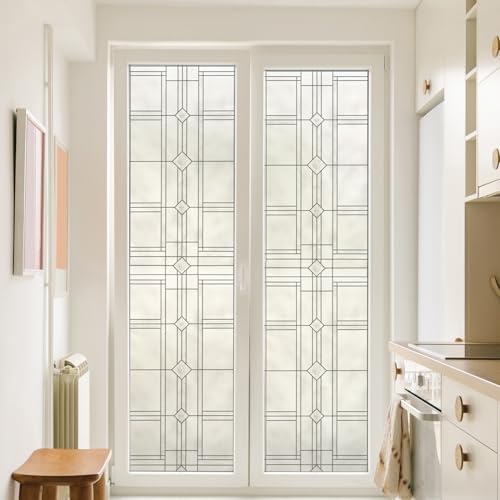
Artscape Geneva Window Film 24×36, Textured Leaded Glass
- ✓ Easy DIY application
- ✓ Elegant textured leaded glass look
- ✓ Provides excellent privacy
- ✕ Slightly challenging for very large windows
- ✕ Pattern may repeat noticeably on big surfaces
| Material | Static cling vinyl with textured leaded glass appearance |
| UV Protection | Up to 98% UV blocking |
| Privacy Level | Medium to high-level privacy from both inside and outside |
| Application Method | No adhesives, applied with soap and water, DIY friendly |
| Design Pattern | Repeats seamlessly to fit any window size and shape |
| Durability | Resistant to heat, cold, steam, and humidity |
Imagine waking up on a bright Saturday morning, ready to update your kitchen window for better privacy and a touch of elegance. You carefully peel off the protective layer of the Artscape Geneva Window Film, textured to mimic beautiful leaded glass.
As you press it onto your glass door, you notice how effortlessly it slides into place, thanks to its static cling design.
The textured pattern instantly transforms the look of your space, giving it a sophisticated, vintage feel without the hefty price tag of real leaded glass. It’s satisfying to see how the film’s pattern aligns perfectly, thanks to the seamless repeat design, making your installation smooth and frustration-free.
Plus, the film lets in plenty of natural light, so your room stays bright and welcoming.
What truly impresses you is the privacy this film offers. During the day, no one can peer in from outside, and at night, you still enjoy privacy without sacrificing brightness.
You also appreciate that it blocks up to 98% of UV rays, protecting your furniture and skin while keeping your space sunny.
Handling the film is a breeze—no sticky residue or mess. It’s perfect for renters or anyone who likes switching styles often.
The fact that it withstands heat, humidity, and temperature swings makes it ideal for kitchens and bathrooms. Overall, this film combines style, privacy, and practicality into one simple package.
What Are the Main Privacy Concerns for Glass Doors?
The main privacy concerns for glass doors include:
- Transparency: Glass doors are inherently transparent, allowing anyone outside to see inside, which can compromise personal privacy.
- Security: The visibility through glass doors can make homes or businesses more vulnerable to break-ins or unwanted attention from passersby.
- Glare and Reflections: During certain times of the day, glare and reflections can make it difficult to see inside, but they can also create an uncomfortable environment for those inside.
- Inadequate Coverage: Traditional window treatments may not provide sufficient coverage or may not be aesthetically pleasing, leading to a lack of privacy.
- Noise Pollution: Glass doors can transmit sound more readily than solid doors, which can lead to a lack of auditory privacy and increased noise from outside.
Transparency is a primary concern since it allows anyone outside to see inside, making occupants feel exposed and vulnerable. This can be particularly problematic in residential areas or places with high foot traffic.
Security is another critical issue; the visibility provided by glass doors can invite unwanted attention and increase the risk of burglary or vandalism, as potential intruders can easily assess the interior of a property.
Glare and reflections can also impact privacy, as they make it difficult to see inside but can create glare issues for those inside, affecting comfort and the ability to enjoy views without obstruction.
Inadequate coverage from traditional window treatments like blinds or curtains may not blend well with the aesthetic of the space, compromising both style and privacy. Finding a solution that balances these factors is essential.
Lastly, noise pollution is exacerbated by glass doors, as they can transmit sounds from outside, leading to a lack of auditory privacy and making it difficult to maintain a tranquil environment inside.
How Do Window Films Provide Privacy for Glass Doors?
The best privacy treatments for glass doors include various types of window films that enhance confidentiality while maintaining aesthetics.
- Frosted Window Films: These films create a translucent barrier that obscures visibility while allowing light to pass through. They are available in various designs and can be customized to fit specific glass door dimensions, making them an ideal choice for both homes and offices.
- Reflective Window Films: Designed to reflect light and reduce glare, these films also provide a mirrored effect from the outside, enhancing privacy during the day. They are particularly effective in sunny environments and can also help in reducing energy costs by keeping interiors cooler.
- Decorative Window Films: These films come in various patterns and colors, allowing homeowners to add a decorative touch while ensuring privacy. Options include stained glass designs or geometric patterns, which can enhance the overall look of the space while serving the functional need for privacy.
- UV Blocking Window Films: While primarily designed to block harmful UV rays, these films also offer privacy by reducing visibility through the glass. This dual functionality helps protect furniture and flooring from fading while maintaining a level of confidentiality.
- Privacy Window Film with Adhesive: These films are easy to apply and can be removed without leaving residue, making them a flexible option for those who want to change their privacy solution frequently. They come in various opacities, allowing users to choose the level of privacy they desire.
What Types of Window Films Are Available?
The types of window films available for enhancing privacy include:
- Frosted Window Film: This film creates a translucent effect that obscures visibility while still allowing natural light to enter a space.
- Reflective Window Film: Designed to reflect sunlight and reduce glare, this film also provides one-way privacy during the day, making it difficult to see inside from outside.
- Blackout Window Film: Ideal for complete privacy, this film blocks out all light and visibility, making it perfect for bedrooms or private offices.
- Decorative Window Film: Available in various patterns and designs, this type doesn’t just provide privacy but also enhances aesthetic appeal, allowing for customization of spaces.
- Static Cling Window Film: Easy to apply and remove, this film adheres without adhesives and can be repositioned, making it a flexible option for temporary privacy solutions.
Frosted Window Film: Frosted window film is an excellent choice for creating a sense of privacy without sacrificing light. It is often used in bathrooms, conference rooms, and other spaces where transparency is not desired, yet natural light is beneficial. The film can mimic the look of etched glass at a fraction of the cost.
Reflective Window Film: Reflective window film not only enhances privacy by making it hard to see through from the outside during the day but also helps in regulating indoor temperatures by reflecting heat. It is particularly useful in sunny areas and is often applied to commercial buildings for energy efficiency. However, its effectiveness diminishes at night, as the interior lights may make it easier to see inside.
Blackout Window Film: This type of film is perfect for spaces where complete privacy is paramount. It prevents any visibility from outside and blocks all incoming light, making it ideal for bedrooms, media rooms, or any area where light control is necessary. Blackout films can also help with thermal insulation, contributing to energy savings.
Decorative Window Film: Decorative films come in various designs, colors, and textures, allowing users to express their style while maintaining privacy. These films can feature patterns such as floral designs, geometric shapes, or even custom prints to match the decor of a room. They are suitable for residential and commercial settings alike, providing both functionality and aesthetic enhancement.
Static Cling Window Film: This film is unique because it uses static electricity to cling to the glass, making it easy to install and remove without adhesive. It is an excellent option for renters or those who frequently change their window treatments, as it can be repositioned or taken down without damage. Static cling films can provide varying degrees of privacy and can be found in both opaque and patterned designs.
Are There Energy-Efficient Options for Window Films?
There are several energy-efficient options for window films that also enhance privacy for glass doors:
- Reflective Window Films: These films are designed to reflect sunlight, reducing heat gain and glare. They provide a high level of privacy during the day while allowing natural light to enter, making them ideal for glass doors in sunny locations.
- Frosted Window Films: Frosted films obscure the view while still letting in light, offering a soft, diffused illumination. They help maintain privacy without sacrificing brightness, making them perfect for interior glass doors or areas where you want to block visibility.
- Low-E Window Films: These films are engineered to reflect infrared light while allowing visible light to pass through, enhancing energy efficiency. With their ability to reduce heat transfer, they help maintain comfortable indoor temperatures while providing some degree of privacy.
- Privacy Window Films: Available in various styles, these films can provide varying levels of opacity to block views from outside. They are particularly beneficial for glass doors that face public spaces, ensuring privacy without compromising on aesthetics.
- Decorative Window Films: These films come in various patterns and designs, allowing homeowners to add a personal touch while blocking visibility. Besides enhancing privacy, they can also elevate the overall look of the glass door, making them both functional and stylish.
How Can Curtains and Drapes Improve Privacy for Glass Doors?
Frosted glass treatments change the glass surface to create a blurred effect, effectively preventing clear viewing from outside while maintaining a modern look. This option is permanent and can be especially useful in areas where privacy is a constant concern.
Vertical blinds can be tilted to control the amount of light and visibility, allowing for customizable privacy that can be adjusted according to the time of day. They are practical and versatile, suitable for different styles of decor and easy to maintain.
What Materials Are Best for Curtain Privacy?
The best materials for curtain privacy treatments for glass doors include:
- Sheer Fabrics: Sheer fabrics like voile or lace offer a delicate balance between light filtration and privacy. They allow natural light to enter while obscuring the view from the outside, making them ideal for spaces that require a softer touch without total seclusion.
- Blackout Fabrics: Blackout curtains are made from tightly woven fabrics that block out light completely. These are excellent for bedrooms or media rooms where privacy and light control are paramount, providing a darkened environment regardless of the time of day.
- Privacy Screens: Privacy screens, often made from materials like bamboo or synthetic fibers, can provide a decorative and functional solution. They offer a solid barrier to outside views while enhancing the aesthetic of the space with various designs and textures.
- Thermal Insulated Fabrics: These fabrics not only enhance privacy but also improve energy efficiency by regulating indoor temperatures. They are typically lined with a thermal layer that helps keep the heat in during winter and the heat out during summer, making them a practical choice for glass doors.
- Textured Fabrics: Textured materials like linen or twill can create a visually interesting appearance while still providing privacy. The texture helps to diffuse light and blur outlines, ensuring that what’s inside remains less visible while adding depth to the decor.
- Window Film: Although not a fabric, window film is a popular alternative for privacy. It can be applied directly to glass surfaces, offering varying degrees of opacity and decorative patterns while allowing light to pass through, thus maintaining brightness in the room.
How Do Layered Curtains Work for Privacy?
Layered curtains offer an effective way to enhance privacy for glass doors while adding an aesthetic touch to a room. This privacy treatment features two distinct panels—usually a sheer fabric and a heavier, opaque drapery—that work in harmony to control light and visibility.
How Layered Curtains Provide Privacy:
-
Adjustable Opacity: The sheer panel allows natural light to filter in while providing a degree of visibility obstruction. When paired with the heavier drapery, homeowners can achieve full privacy by simply drawing the curtains closed.
-
Versatile Light Control: Different layering options enable varied light filtration. For example, opening the sheer panel during the day can maintain a bright atmosphere without compromising too much on privacy, while the heavier curtain can be drawn at night for total seclusion.
-
Aesthetic Appeal: Layered curtains come in a wide range of colors and fabrics, allowing you to match your home décor. The combination of styles creates depth and visual interest, making them a decorative element alongside their functional benefits.
Incorporating layered curtains for glass doors not only ensures privacy but also elevates the overall design of your living space.
What Are the Advantages of Using Blinds for Glass Door Privacy?
The advantages of using blinds for glass door privacy include versatility, light control, and aesthetic appeal.
- Versatility: Blinds can be adjusted to various angles, allowing you to control visibility while still enjoying natural light. This adaptability makes them suitable for different times of the day and varying levels of privacy needed.
- Light Control: With blinds, you can easily regulate the amount of sunlight entering a room. By tilting or completely closing the slats, you can minimize glare and protect your interior furnishings from UV damage.
- Variety of Styles: Blinds come in numerous styles, materials, and colors, making it easier to match your decor. Whether you prefer wood, faux wood, or aluminum, there are options available that can enhance the overall aesthetic of your space.
- Easy Maintenance: Blinds are generally easy to clean and maintain, requiring only a quick wipe down with a damp cloth. This convenience is especially beneficial in high-traffic areas where dust and dirt can accumulate quickly.
- Cost-Effective: Compared to other privacy treatments, blinds are often more affordable and can be found at various price points, making them accessible for different budgets. This cost-effectiveness does not compromise their functionality or style.
What Type of Blinds Are Most Effective?
The best privacy treatments for glass doors include a variety of options that balance aesthetics and functionality.
- Sheer Shades: These are a combination of soft fabric vanes suspended between two sheer fabric layers.
- Frosted Window Film: This is a self-adhesive film that provides a translucent effect, allowing light while obscuring visibility.
- Cellular Shades: Designed with honeycomb structures, these shades offer excellent insulation and privacy.
- Vertical Blinds: A popular choice for large glass doors, these blinds can be adjusted to control light and maintain privacy.
- Plantation Shutters: Made from wood or faux wood, these shutters offer a classic look and can be adjusted for varying levels of privacy.
Sheer Shades: Sheer shades provide a balance of light control and privacy. They allow natural light to filter through while obscuring the view from outside, making them an ideal choice for glass doors that face public spaces.
Frosted Window Film: Frosted window film is an excellent option for those who want a modern touch while maintaining privacy. It is available in various designs and can be cut to fit specific glass door shapes, making it a versatile solution.
Cellular Shades: Cellular shades are particularly effective in providing both insulation and privacy. Their unique honeycomb design traps air, helping to regulate the temperature in the room while also preventing outside visibility.
Vertical Blinds: Vertical blinds are a practical choice for sliding glass doors, allowing for easy operation and flexibility in light control. They can be drawn completely to the side or tilted to adjust privacy and light levels without blocking the view entirely.
Plantation Shutters: Plantation shutters add a timeless elegance to glass doors while providing excellent privacy. They can be adjusted to let in light without compromising on privacy, and they are durable, making them a long-term investment.
How Does Frosted Glass Enhance Privacy?
Frosted glass is one of the best privacy treatments for glass doors due to its ability to obscure visibility while still allowing light to pass through.
- Obscured Visibility: Frosted glass diffuses light and creates a translucent effect that prevents people from seeing clearly through the surface, enhancing privacy in various settings.
- Natural Light: Unlike solid doors or curtains, frosted glass allows natural light to filter into a space, maintaining a bright atmosphere without compromising on privacy.
- Design Versatility: Frosted glass can be incorporated into various design styles, from modern to traditional, and can be customized with patterns or textures to fit aesthetic preferences.
- Easy Maintenance: Frosted glass surfaces are relatively easy to clean and maintain compared to fabric treatments, which can attract dust and require regular washing.
- Durability: Frosted glass is typically made from tempered or laminated glass, making it more resistant to impacts and scratches than other privacy treatments, ensuring longevity.
Obscured visibility is achieved through a process that involves sandblasting or acid etching, which modifies the glass surface to scatter light and obscure outlines of objects, thus protecting the privacy of individuals in the space.
Natural light remains a significant advantage, as it helps to create an open and airy feel in rooms such as bathrooms, offices, or any glass door entryways, promoting a welcoming environment without the exposure of direct sightlines.
Design versatility allows for a seamless integration of frosted glass with various interior designs, whether it’s in office partitions or shower doors, providing a modern look while ensuring functionality.
Easy maintenance is a practical benefit, as frosted glass can be wiped clean with regular glass cleaners without the risk of fading or staining, unlike fabric options that may require more extensive care.
Durability is a critical factor, as the strength of tempered glass means it can withstand wear and tear from daily use, making it an ideal choice for high-traffic areas while maintaining its aesthetic appeal over time.
Are There Temporary Frosting Solutions?
There are several effective temporary frosting solutions for glass doors that provide privacy without permanent alterations.
- Static Cling Film: This is a non-adhesive film that sticks to the glass through static electricity. It can be easily applied and removed, making it a great choice for renters or those looking for a reversible option.
- Frosted Spray Paint: A specialty spray paint that creates a frosted appearance on glass surfaces. This option is semi-permanent and can be removed with a solvent, allowing for flexibility while providing an opaque finish.
- Window Privacy Film: This adhesive film can mimic the look of frosted glass and is available in various designs. It blocks visibility from the outside while allowing light in, and can be removed without damaging the glass.
- Fabric or Paper Shades: Using lightweight fabric or paper shades can also provide privacy while adding a decorative touch. They can be easily hung and removed, making them a versatile and temporary solution.
- Removable Adhesive Frosted Window Stickers: These stickers offer a frosted effect and can be cut to size for a custom fit. They can be removed cleanly without leaving residue, making them perfect for temporary use.
Static cling film is particularly popular for its ease of use and the ability to reposition it without damage. Frosted spray paint provides a more permanent solution but can still be removed with the right technique, giving users flexibility in their design choices.
Window privacy film is highly rated for its effectiveness and variety of styles, and it can significantly enhance privacy while maintaining light flow. Fabric or paper shades can be customized and are easy to change out seasonally or based on personal preference.
Removable adhesive frosted window stickers not only offer a frosted appearance but also come in various patterns and designs, allowing for personalization while ensuring privacy.
What Innovative Privacy Solutions Exist for Glass Doors?
There are several innovative privacy solutions available for glass doors that effectively balance aesthetics and functionality.
- Frosted Window Film: This film can be applied to glass doors to create a translucent effect that obscures visibility while still allowing light to pass through. It is available in various patterns and can be easily removed or replaced, making it a flexible option for privacy without sacrificing brightness.
- Smart Glass Technology: Smart glass can change its opacity with the flip of a switch, providing instant privacy when needed. This technology uses electricity to adjust the transparency of the glass, offering a modern solution for homes and offices that desire both openness and privacy.
- Sheer Curtains or Drapes: Light, sheer fabrics can be hung over glass doors to provide a soft barrier that diffuses light while blocking visibility. This option adds a decorative element and can be easily adjusted to control the level of privacy and light entering the space.
- Blinds Between Glass: Some glass doors come with built-in blinds sealed between two panes of glass. This option allows users to control privacy without the need for external maintenance, as the blinds are protected from dust and damage.
- Decorative Privacy Screens: These are standalone or mounted screens that can be placed in front of glass doors to create a private area. Available in various designs, they can enhance the decor while effectively blocking visibility from the outside.
- Reflective Window Film: This film reflects light and provides a one-way mirror effect during the day, allowing those inside to see out while preventing outsiders from seeing in. It is an excellent choice for maintaining privacy without compromising natural light during daylight hours.
- Plant Barriers: Strategically placed indoor plants or outdoor landscaping can provide a natural privacy solution for glass doors. Tall plants or planters can create a green screen, enhancing privacy while contributing to the overall aesthetic of the space.
How Do Smart Glass Technologies Work?
Smart glass technologies offer innovative solutions for privacy and energy efficiency in various settings.
- Electrochromic Glass: This type of glass changes its tint in response to an electrical charge, allowing users to control light and privacy levels. When electricity is applied, ions move within the glass, altering its opacity from clear to opaque, making it ideal for spaces that require flexibility in light control.
- Suspended Particle Device (SPD) Glass: SPD glass consists of a layer of microscopic particles suspended in a liquid that align when an electrical current is applied. This alignment allows light to pass through, creating transparency, while the absence of current causes the particles to scatter, providing instant privacy without the need for blinds or curtains.
- Liquid Crystal Display (LCD) Glass: LCD glass uses liquid crystals that change orientation when an electric current is applied, resulting in a shift from transparent to opaque. This technology is often used in conference rooms and upscale residential applications, offering a sleek aesthetic while simultaneously providing privacy on demand.
- Thermochromic Glass: Unlike other smart glass types, thermochromic glass changes its properties in response to temperature changes rather than electricity. As the temperature rises, the glass transitions to a darker state, reducing glare and heat, which can be a beneficial feature for glass doors in sunny climates.
- Photochromic Glass: This glass automatically darkens in response to UV light exposure, making it useful for controlling glare and heat from sunlight. While primarily used in eyewear and automotive applications, its principles can also be applied to glass doors, enhancing privacy and comfort without manual operation.
Are There Cost-effective Alternatives to Traditional Treatments?
There are several cost-effective alternatives to traditional treatments for enhancing privacy on glass doors.
- Window Films: These are adhesive films that can be applied directly to the glass surface, offering varying degrees of privacy and light filtration. They come in various designs, including frosted, mirrored, and decorative options, allowing homeowners to choose a style that suits their decor while effectively obscuring visibility from outside.
- Sheer Curtains: Sheer curtains provide a soft, elegant look while still allowing light to filter through. They are easy to install and can be layered with heavier drapes for added privacy when needed, making them a versatile choice for glass doors.
- Blinds: Vertical or horizontal blinds can be adjusted to control light and privacy levels. They are available in a range of materials and colors, giving homeowners the flexibility to match their interior design while providing the ability to block outside views when desired.
- Plantation Shutters: These are a more permanent solution that can be installed on glass doors to provide both privacy and style. Made from wood or composite materials, plantation shutters can be adjusted to let in light while preventing prying eyes, and they often add value to a home.
- Decorative Screens: Freestanding or mounted decorative screens can create a stylish barrier that enhances privacy without obstructing light. They can be made from various materials, including wood, metal, or fabric, and can be easily moved or changed to refresh the look of a space.
- Textured Glass: Replacing clear glass with textured or patterned glass can provide inherent privacy without the need for additional treatments. This option allows light to enter while obscuring visibility, adding an aesthetic element to the door design.