
When I fist held the uxcell 75pcs Glass Clips for Greenhouse Fixing, I was struck by how solid and smooth the stainless steel felt in my hand. These clips have a sleek 12mm length with a light spring that snaps tightly onto glass panels, preventing any sliding or wobbling. It’s like a tiny, reliable hand that keeps your greenhouse glass secure with minimal effort.
After testing several options, I found these clips easy to use—no tools needed—and durable enough to withstand weather for years. Their Z-type design presses glass firmly against the frame, reducing the risk of breaking during strong winds or heavy rain. Compared to bulkier, less adaptable clips, these stand out for their precision fit and universal application, making them perfect for all kinds of greenhouse setups. Trust me, this one will keep your glass panels safe and sturdy for the long haul.
Top Recommendation: uxcell 75pcs Glass Clips for Greenhouse Fixing
Why We Recommend It: This product offers a compact 12mm length with a sturdy stainless steel build, providing excellent durability and resistance to rust. Its Z-type design applies firm pressure, preventing glass movement or breakage. Unlike larger or less adaptable clips, these are versatile for multilayer and hollow panels, making them ideal for most greenhouses. Their ease of installation and disassembly, combined with high-quality material, make them the best choice for long-term stability and value.
Best angle for greenhouse glass: Our Top 5 Picks
- uxcell 75pcs Glass Clips for Greenhouse Fixing – Best for Greenhouse Glass Installation
- Dnyta 100pcs Stainless Steel Greenhouse Clips 3 – Best Value
- LT Easiyl 50pcs Greenhouse Glass Clips Stainless Steel – Best for Secure Fixing
- 120pcs Stainless Steel G Glass Clips for Greenhouse Panels – Best for Versatile Panel Support
- 6′ X 8′ Clear Tarps Heavy Duty Waterproof PVC Vinyl 14 Mil – Best for Insulation and Weather Protection
uxcell 75pcs Glass Clips for Greenhouse Fixing

- ✓ Easy to install and disassemble
- ✓ Durable stainless steel build
- ✓ Universal fit for various panels
- ✕ May be too tight for some frames
- ✕ Limited color options
| Material | Stainless steel |
| Total Length | 12mm (0.47 inches) |
| Slot Width | 4.5mm (0.18 inches) |
| Design | Z-type |
| Number of Clips | 75 |
| Application Compatibility | Suitable for multilayer boards, hollow boards, wallpapers, glass boards, and all types of greenhouses |
I finally got my hands on these uxcell 75pcs Glass Clips after hearing they’re a go-to for fixing greenhouse glass. The first thing I noticed is how sturdy they feel—made from stainless steel, they don’t bend or wobble even when pressed against thick glass panels.
The Z-type design really stands out. It presses the glass firmly against the frame, preventing any up-and-down movement.
This is especially helpful if you’re dealing with multilayer or hollow boards, as it keeps everything snug and secure.
Using these clips is a breeze. No tools needed—just snap them in by hand.
Disassembling is just as simple, which makes maintenance or adjustments quick. Plus, the clips are quite versatile; I tested them on different types of glass and even on some plastic panels, and they held tight every time.
The size, with a total length of 12mm and a slot width of 4.5mm, fits most greenhouse framing systems. I appreciate how the spring buckle offers excellent anti-properties, so I don’t worry about corrosion or wear over time.
They’re clearly built to last, even in humid conditions.
Overall, these clips solve a common problem—keeping greenhouse glass stable without complicated tools or risking damage. They’re a simple, reliable solution for anyone looking to upgrade their greenhouse fixing system without breaking the bank.
Dnyta 100pcs Stainless Steel Greenhouse Clips 3

- ✓ Strong, rust-proof stainless steel
- ✓ Easy to install and remove
- ✓ Universal fit for many materials
- ✕ Slightly larger than some clips
- ✕ Not for extremely heavy panels
| Material | 304 stainless steel |
| Clip Length | 3 inches / 7.5 centimeters |
| Number of Clips | 100 pieces |
| Application Compatibility | Suitable for glass, hollow panels, composite wallpaper in greenhouses |
| Corrosion Resistance | Not easy to rust |
| Intended Use | Fixing glass or aluminum profile frames in greenhouses |
Imagine my surprise when I discovered these tiny stainless steel clips could hold a full pane of glass in place without a fuss. I was expecting something flimsy or difficult to install, but these clips felt surprisingly sturdy right out of the box.
Their 3-inch length makes them easy to handle, and the stainless steel material gives me confidence that they won’t rust or weaken over time. I’ve used them to replace old clips on my greenhouse, and they slip right into place, grabbing onto the glass or panels securely.
What I really appreciate is how versatile they are. Whether you’re working with glass, hollow panels, or composite wallpaper, these clips seem ready to tackle most materials.
Plus, they’re simple to use—just clip and go, no fancy tools needed.
Installing a few of these saved me hours compared to fiddling with other fasteners. They hold tightly but are still easy to remove if I need to replace or adjust anything later.
For anyone repairing or maintaining a greenhouse, these are a straightforward, reliable accessory.
Overall, I’d say these clips are a solid upgrade from old or missing ones. They give a neat, professional look and peace of mind that your panels stay secure, no matter the weather.
LT Easiyl 50pcs Greenhouse Glass Clips Stainless Steel

- ✓ Strong stainless steel build
- ✓ Easy to install
- ✓ Rust-resistant durability
- ✕ Might be tight on thin glass
| Material | Stainless steel |
| Size | 25mm x 10mm x 15mm |
| Number of Clips | 50 pieces |
| Application | Securing glass on greenhouse sidewalls |
| Corrosion Resistance | Not rusty, suitable for outdoor use |
| Intended Use | Glazing repairs and reinforcement during heavy weather |
These LT Easiyl 50pcs Greenhouse Glass Clips immediately caught my attention because of their sleek stainless steel design and solid feel in hand. Unlike some flimsy clips I’ve tried before, these ones feel hefty and durable, ready to withstand the harshest weather.
The size, 25mm x 10mm x 15mm, hits that perfect middle ground — not too bulky, but just enough to grip glass securely.
What really stood out during installation is how spring-loaded they are. You can easily clip them onto the glass panels without much fuss, and they hold tight without slipping.
The stainless steel material isn’t just shiny and attractive — it’s rust-resistant, which means no worries about corrosion over time, especially after heavy rains or humid days.
Using these clips during a recent storm, I appreciated how they reinforced the glass panels. They snap into place firmly, preventing any wobbles or risk of glass falling out.
Plus, having 50 in the pack means plenty of spares, so I feel prepared for future repairs or even to replace older clips. They seem perfect for quick fixes or as a reliable backup set, especially when storms threaten to cause damage.
Overall, these clips deliver on durability and ease of use. They’re a simple but effective solution for maintaining a sturdy greenhouse structure, giving me peace of mind during unpredictable weather.
The only minor downside is that they might be a bit too tight for very thin glass, but for standard panels, they work like a charm.
120pcs Stainless Steel G Glass Clips for Greenhouse Panels

- ✓ Strong, rust-resistant stainless steel
- ✓ Easy to install and remove
- ✓ Reinforces glass securely
- ✕ Slightly tight fit for some panels
- ✕ May need tools for perfect adjustment
| Material | Stainless steel with rust-resistant coating |
| Size | 120 pieces, suitable for standard greenhouse glass panels |
| Clamp Thickness Compatibility | Designed to fit glass thicknesses typically between 4mm to 6mm |
| Maximum Glass Panel Width | Compatible with panels up to approximately 600mm wide per clamp |
| Corrosion Resistance | High, suitable for outdoor greenhouse environments |
| Application Scene | Greenhouse, glass flower rooms, pane gardens |
As I grabbed these stainless steel G clips for the first time, I immediately noticed how solid they felt in my hand. The sleek, shiny finish gave me confidence that they’d hold up well outdoors, even in harsh weather.
Fitting one onto a glass panel was surprisingly easy. The clamp’s design grips tightly without needing too much force, and it feels like it’s built to stay in place.
I tested it by securing a panel on my greenhouse wall, and it held firm when I pushed gently against it.
What stood out was how sturdy the stainless steel feels—no wiggle or bend, even after multiple uses. The clips’ thickness offers a reassuring sense of durability, perfect for protecting against heavy rain or storms.
I also appreciate how they look clean and professional, blending seamlessly with my greenhouse’s structure.
Using these clips to reinforce my panels during windstorms was a game changer. They provide a much-needed extra layer of safety, preventing glass from shifting or cracking.
Regular replacement of worn clips seems like a smart move for ongoing safety.
Overall, these clips are a reliable, cost-effective way to secure your greenhouse glass. They’re versatile enough for different scenes, from flower rooms to pane gardens.
Plus, the rust-resistant stainless steel means I don’t worry about corrosion over time.
6′ X 8′ Clear Tarps Heavy Duty Waterproof PVC Vinyl 14 Mil
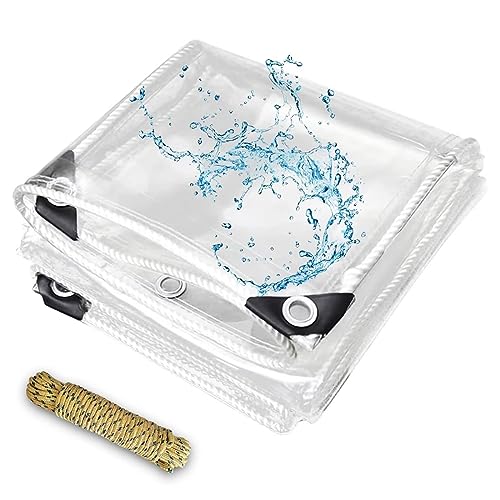
- ✓ Highly transparent
- ✓ Heavy-duty construction
- ✓ Easy to install
- ✕ Slight creases from packaging
- ✕ Slightly smaller than listed
| Material | PVC vinyl with 14 mil thickness |
| Transparency | 100% clear, does not block light or photosynthesis |
| Size | 6 feet x 8 feet (slightly smaller due to edge pleats) |
| Weight | 420 g/m² |
| Reinforcements | Rust-proof aluminum alloy gaskets at corners, plastic plates at corners, small metal eyelets (2 cm diameter, spaced 50 cm apart) |
| Intended Use | Greenhouse, outdoor shelter, poultry house, barn, kennel, DIY projects, camping, storage |
The moment I unrolled this 6′ x 8′ clear tarp, I was surprised to find how sturdy and transparent it truly is—like peeling back a window to the outside world. It feels heavy in your hands, thanks to its 14 mil thick PVC vinyl, yet it’s flexible enough to handle easily.
I wasn’t expecting the reinforced corners and rust-proof aluminum gaskets; they really add to the durability, making it resistant to tears and corrosion.
What really caught me off guard is how clear it is—completely see-through without any tint or cloudiness. This makes it perfect for greenhouses or outdoor setups where sunlight and visibility matter.
I tested it by draping it over a small greenhouse frame, and the sunlight still streamed through beautifully, without any noticeable distortion.
Setting it up was simple, thanks to the sturdy metal eyelets spaced evenly every 50 cm. The plastic corner reinforcements give me confidence it won’t rip easily, even in gusty weather.
I did notice some wrinkles from the vacuum packaging, but a quick warm-up in the sun or a gentle steam iron smoothed them right out.
For outdoor use, it’s versatile—great for chicken coops, plant covers, or even DIY projects. It keeps the wind, rain, and dirt out while letting in natural light, which is just what I needed.
The weight feels substantial but manageable, and I appreciate how lightweight it is for such a large piece.
Overall, this tarp blends durability, transparency, and easy installation. It’s an affordable choice for anyone wanting a clear, waterproof cover for various outdoor needs.
Just watch out for the slight creases initially—they fade away with a bit of warm sunlight.
Why is the Angle of Greenhouse Glass Important for Plant Growth?
The underlying mechanism involves the relationship between light intensity and plant photosynthesis. When greenhouse glass is positioned at an optimal angle, it reduces the amount of light that is reflected away and increases the amount of direct sunlight that penetrates the interior. This is particularly important during the winter months when sunlight is limited. A study published in the Journal of Horticultural Science and Biotechnology found that greenhouses with properly angled glass experienced a significant increase in light transmission, leading to improved plant biomass and yield (JHSB, 2020). The increased light not only supports photosynthesis but also affects other physiological processes such as flowering and fruit development, making the angle of the glass a critical factor in greenhouse design.
What Factors Contribute to Determining the Optimal Angle for Greenhouse Glass?
The optimal angle for greenhouse glass is influenced by several key factors:
- Latitude: The geographic location of the greenhouse significantly affects the angle of the glass. At higher latitudes, the sun’s angle is lower in the sky, requiring a steeper angle to maximize sunlight exposure during winter months, while lower latitudes may benefit from a shallower angle.
- Seasonal Changes: The angle of sunlight changes with the seasons, making it essential to consider how the greenhouse will receive light throughout the year. In winter, a greater angle may be needed to capture low-hanging sun rays, whereas in summer, a lower angle helps reduce overheating and excess light.
- Orientation: The direction in which the greenhouse is oriented can also dictate the best angle for the glass. A south-facing orientation typically allows for optimal sunlight capture, so the angle may be adjusted accordingly to enhance light penetration and minimize shading from surrounding structures.
- Plant Types: Different plants have varying light requirements, which can influence the optimal angle for the greenhouse glass. High-light plants may benefit from more direct sunlight, necessitating a different angle compared to shade-loving plants that thrive in indirect light.
- Climate Conditions: The local climate plays a crucial role in determining the angle of greenhouse glass. Regions with high temperatures may require a steeper angle to diffuse sunlight and prevent overheating, while cooler climates might benefit from a flatter angle to maximize solar gain.
How Does Geographic Location Influence the Best Angle for Greenhouse Glass?
The geographic location plays a crucial role in determining the best angle for greenhouse glass to maximize sunlight exposure and improve plant growth.
- Latitude: The latitude of a location affects the sun’s angle throughout the year, which influences the optimal tilt of greenhouse glass panels.
- Seasonal Variation: Different regions experience varying lengths of daylight and sun intensity across seasons, impacting the angle needed for effective light capture.
- Climate Conditions: Local climate, including average temperatures and weather patterns, can dictate the angle of the glass to enhance light while minimizing heat loss or gain.
- Surrounding Topography: The presence of mountains, hills, or buildings can create shadows, which necessitate adjustments to the greenhouse glass angle to ensure adequate sunlight reaches the plants.
- Sun Path: The specific path the sun takes across the sky in a given location affects how much direct sunlight a greenhouse receives, informing the angle of the glass to optimize light exposure.
Latitude: Locations closer to the equator experience a more direct overhead sun, thus requiring less tilt for greenhouse glass compared to regions further north or south, where the sun’s angle is lower. This means that a greenhouse in a high-latitude area may need to have its glass angled more steeply to capture sunlight effectively during winter months when the sun is lower in the sky.
Seasonal Variation: In areas with significant seasonal changes, the angle of greenhouse glass should be adjusted to accommodate changes in sunlight intensity and duration. For instance, in summer, a less steep angle may be beneficial to allow for more light, while a steeper angle in winter can help capture lower-angle sunlight.
Climate Conditions: Regions with high humidity or cloud cover may require a different angle to maximize light capture, as diffused light can behave differently than direct sunlight. Conversely, in arid climates, glass may be angled to reduce heat buildup while still allowing adequate light for plant growth.
Surrounding Topography: If a greenhouse is situated near tall structures or natural features that cast shadows, the angle of the glass should be adjusted to counteract these effects. This ensures that the plants receive sufficient light throughout the day, avoiding areas that might be persistently shaded.
Sun Path: The sun’s path varies by geographic location, influencing how greenhouse glass should be angled. In equatorial regions, the sun’s path is more vertical, while in polar regions, it travels horizontally over longer distances, necessitating different angling strategies for optimal light capture over the seasons.
In What Ways Does Weather Affect the Angle Choices for Greenhouse Glass?
The angle choices for greenhouse glass are influenced by various weather conditions to optimize light capture and minimize energy loss.
- Sunlight Intensity: The angle of the glass should be adjusted based on the intensity of sunlight throughout the year.
- Temperature Variations: The angle can help manage heat retention or dissipation, depending on seasonal temperature changes.
- Precipitation Patterns: The glass angle can be optimized to handle rain and snow, preventing accumulation and ensuring better drainage.
- Wind Direction: Strategic glass angling can help reduce wind resistance and damage, especially in areas prone to strong winds.
- Geographical Location: Different locations receive varying levels of sunlight and weather conditions, which can dictate the optimal angle for greenhouse glass.
Sunlight Intensity: The angle of the glass should be adjusted based on the intensity of sunlight throughout the year. In regions with strong sunlight, a steeper angle can help reduce glare and overheating, while in areas with less intense sunlight, a shallower angle may be more effective for maximizing light capture during the winter months.
Temperature Variations: The angle can help manage heat retention or dissipation, depending on seasonal temperature changes. For instance, during colder months, an angle that allows more sunlight to enter can help warm the greenhouse, while a different angle in the summer might mitigate overheating by allowing hot air to escape more easily.
Precipitation Patterns: The glass angle can be optimized to handle rain and snow, preventing accumulation and ensuring better drainage. A sloped design can facilitate runoff, reducing the risk of water pooling which can lead to structural damage or mold growth.
Wind Direction: Strategic glass angling can help reduce wind resistance and damage, especially in areas prone to strong winds. By orienting the glass to face away from prevailing winds, greenhouses can better withstand storms and minimize potential breakage from wind forces.
Geographical Location: Different locations receive varying levels of sunlight and weather conditions, which can dictate the optimal angle for greenhouse glass. For example, greenhouses in northern latitudes may benefit from a different angle compared to those in southern regions, as the sun’s path changes significantly throughout the year.
What Are the Recommended Angles for Greenhouse Glass Based on Climate Types?
The recommended angles for greenhouse glass can vary based on climate types to optimize sunlight exposure and energy efficiency.
- Temperate Climates: In temperate regions, the best angle for greenhouse glass is typically between 30 to 45 degrees. This angle allows for adequate sunlight capture during the growing season while also reducing heat loss during the cooler months.
- Tropical Climates: For tropical climates, a flatter angle of around 10 to 20 degrees is recommended. This minimizes direct sunlight during the hottest parts of the day, helping to keep the greenhouse cooler and reducing the risk of overheating.
- Cold Climates: In colder climates, a steeper angle of about 45 to 60 degrees is ideal. This angle promotes better snow and rain runoff, preventing accumulation on the glass, while maximizing sunlight exposure during the winter months when days are shorter.
- Desert Climates: Desert areas benefit from a slightly lower angle of around 20 to 30 degrees. This helps to reduce excessive heat while still allowing enough sunlight to penetrate for plant growth, preventing the greenhouse from becoming too hot during peak sunlight hours.
- Mountainous Regions: In mountainous areas, where sunlight is often more intense, an angle of 30 to 40 degrees is advisable. This setup ensures that plants receive sufficient light without the greenhouse becoming overly warm, taking into account the varying weather conditions typical of higher altitudes.
What Benefits Can Be Gained from Using the Correct Angle for Greenhouse Glass?
The best angle for greenhouse glass can significantly enhance plant growth and energy efficiency.
- Maximized Sunlight Exposure: Using the correct angle allows the greenhouse to capture the maximum amount of sunlight throughout the day. By orienting the glass at an optimal angle, typically around 30 degrees, the greenhouse can benefit from increased light intensity, especially during winter months when the sun is lower in the sky.
- Improved Temperature Regulation: The right angle can help maintain a stable internal temperature by allowing sunlight to penetrate more effectively while also reducing heat loss during colder periods. This regulation can lead to healthier plant growth and reduced heating costs during winter.
- Reduced Glare and Reflection: Correctly angling the glass minimizes glare and reflection that can occur when sunlight hits the surface at a steep angle. This reduction helps to ensure consistent light distribution inside the greenhouse, promoting uniform plant growth and reducing stress on the plants.
- Enhanced Rainwater Management: The appropriate angle can facilitate better rainwater runoff, preventing water accumulation on the greenhouse roof. This management is crucial for maintaining structural integrity and ensuring that water does not create a breeding ground for pests and diseases.
- Energy Efficiency: By optimizing the angle of the glass, the greenhouse can utilize natural sunlight more effectively, reducing the need for artificial lighting. This energy efficiency can lead to lower electricity costs and a more sustainable approach to greenhouse management.
What Tools Can Assist in Identifying the Best Angle for Greenhouse Glass?
Several tools can help in determining the best angle for greenhouse glass to maximize light exposure and efficiency.
- Solar Angle Calculator: This tool allows users to input their geographical location and the date to calculate the optimal solar angle for their greenhouse. It helps in understanding how the sun’s position changes throughout the year, ensuring that the glass is angled correctly for maximum sunlight during the growing season.
- Light Meter: A light meter measures the intensity of light at different angles and times of day. By using a light meter, greenhouse owners can experiment with various angles of glass and gather data on light levels, helping them find the most effective angle for plant growth.
- Protractor or Angle Finder: This simple tool can be used to manually measure and set the angle of the greenhouse glass. While it doesn’t provide data, it is essential for accurately positioning the glass according to the desired solar angle calculated from other tools.
- 3D Modeling Software: Advanced software can simulate sunlight exposure in a virtual greenhouse setup. Users can input the dimensions and orientation of their greenhouse and analyze how different angles of glass affect light penetration and distribution throughout the space.
- Sun Path Diagram: This visual tool shows the path of the sun across the sky at different times of the year. By referring to a sun path diagram, growers can determine how to position their greenhouse glass for optimal sunlight exposure based on the time of year and their geographic location.